
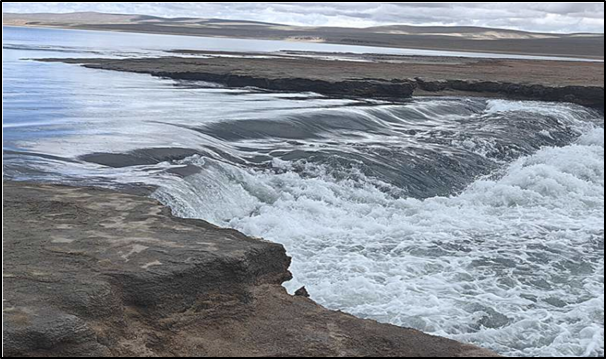
Climate change is dramatically reshaping the hydrological landscape of the Qinghai-Tibet Plateau, as highlighted by a recent study revealing new hydrological connections between Tibetan lakes and the Yangtze River. This transformation, accelerated by warming temperatures and extreme precipitation, has increased flood risks downstream while destabilizing local ecosystems and threatening critical infrastructure.
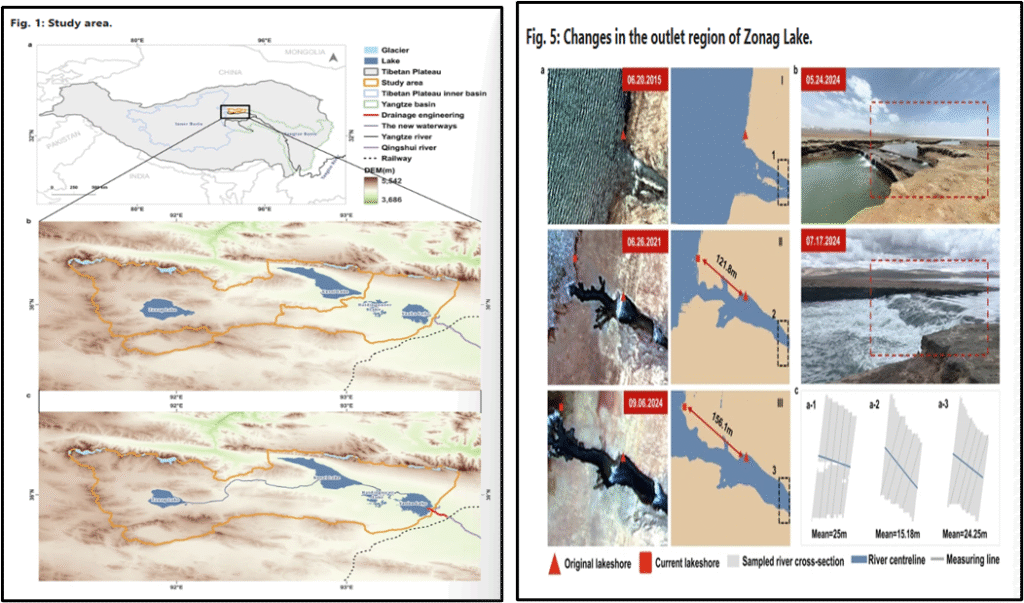
The study, led by Prof. Lu Shanlong from the Chinese Academy of Sciences and published in Communications Earth & Environment on 29 Oct 2025, China faces mounting ecological and geopolitical risks as climate change reshapes Tibetan Plateau hydrology. Once-isolated lakes like Zonag and Yanhu have connected to the Yangtze headwaters, intensifying downstream flood threats. Extreme rainfall 195% above historical averages in 2024 has widened breaches, destabilized shorelines, and fueled sandstorms, eroding antelope habitats. Artificial drainage projects further entwine fragile ecosystems with China’s vital river systems, exposing vulnerabilities in water security and disaster prevention. The “Asian Water Tower” now symbolizes Beijing’s dilemma: unchecked climate pressures magnify domestic instability and regional dependence on Yangtze flows, challenging China’s resilience and amplifying strategic liabilities.
From a broader perspective, these changes exemplify how climate change triggers hydrological reorganization in high-altitude mountain regions, compounded by human interventions like drainage projects. The combined impact stresses “climate stress–system response” relationships, where warming, glacier melt, and heavy rainfall synergize with anthropogenic activity, accelerating unstable feedback loops in river-lake systems. Projected warming and wetter conditions through 2035 indicate persistent hydrological and ecological instability, requiring urgent adaptive responses to mitigate future disasters.
The researchers recommend concrete mitigation strategies: reinforcing vulnerable outlet structures at Zonag Lake to prevent further breaches, stabilizing shorelines through gravel to reduce erosion and sediment exposure, and implementing a robust long-term monitoring system. These measures are critical to prevent further floods downstream, ecological degradation, and harmful sandstorms. Additionally, this study raises concern about China’s management of the “Asian Water Tower,” emphasizing the need for transparent, science-based governance of water resources that accounts for both natural dynamics and human infrastructure.
This evolving crisis on the Tibetan Plateau highlights a concerning environmental trajectory linked to China’s activities and climate policies. The hydrological transformation poses risks not only within China but also for all Asian regions reliant on the Yangtze and its tributaries. Yet, there is minimal international dialogue or cooperation addressing these transboundary impacts.
Transparent data sharing, environmental accountability, and prevention of further ecological damage should become priorities to safeguard downstream populations and the fragile high-altitude ecosystems. Without such concerted action, intensified flooding and ecological destruction driven by climate change and human intervention may escalate, with far-reaching consequences for Asia’s water security and biodiversity.





Leave a Reply