
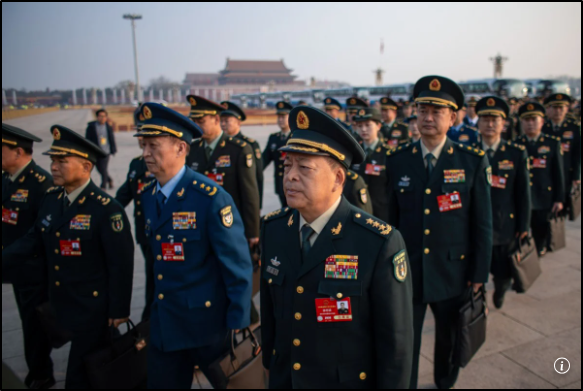
The Chinese military’s latest move to tighten political discipline and party loyalty within the People’s Liberation Army (PLA) marks a significant intensification of Beijing’s ongoing anti-corruption crusade. Effective 01 January 2026, new rules issued as revisions to the Communist Party’s disciplinary regulations underscore President Xi Jinping’s centralization of control over the military amidst an environment marred by corruption scandals and declining operational integrity.
Reinforcing Party Control and Political Loyalty
According to the SCMP, At the heart of the new regulations is a firm assertion that the PLA must strictly adhere to the Communist Party’s leadership, with no room for dissent or “erroneous political remarks.” The rules emphasize full compliance with directives from the Central Military Commission (CMC), China’s top military decision-making body, and explicitly require implementation of the chairman responsibility system. This system enshrines the CMC chairman currently President Xi as commander-in-chief, granting him ultimate authority over military operations and personnel decisions, thereby centralizing power and reducing autonomy among generals.
The PLA Daily, the military’s official mouthpiece, highlighted the rules’ prioritization of “strict political discipline and rules,” signaling Beijing’s intent to eradicate factionalism, political disloyalty, and false narratives undermining the party’s authority. This political rectification effort is closely tied to anti-corruption work, which Beijing views as essential to both the military’s modernization and maintaining an image of incorruptible governance.
Targeting “Fake Combat Capabilities” and Enhancing Readiness
These revisions also address operational concerns, notably the PLA’s war readiness. The new disciplinary framework calls for eliminating “fake combat capabilities,” a term reflecting deficiencies caused by inflated claims about combat preparedness or training effectiveness. This connects to broader military reforms initiated in 2017 that included reducing troop numbers by 300,000 and restructuring command systems to boost efficiency and high-tech modernization.
By clarifying the party committee’s leadership role and reinforcing stringent discipline, the military aims to bolster actual operational capacity and combat effectiveness. This moves underscores Beijing’s urgency to ready the PLA amid increasing regional tensions, particularly with India, Taiwan, and in the Indo-Pacific.
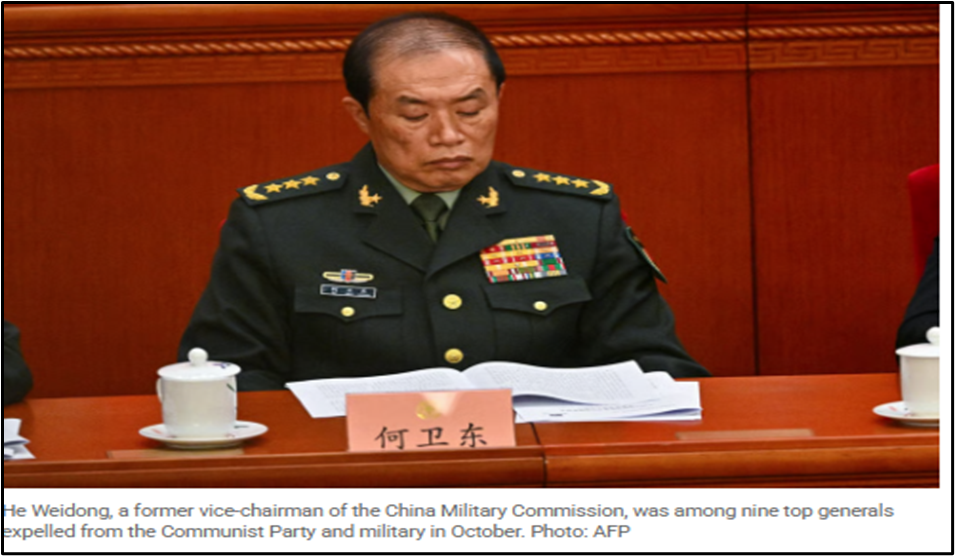
The anti-corruption drive extends to China’s defense industry, where several senior executives in arms manufacturing, aerospace, and research institutes have faced investigation or removal. This upheaval has had real economic consequences: according to a report by the Stockholm International Peace Research Institute (SIPRI), corruption scandals triggered postponements or cancellations of major arms contracts in 2024, causing significant revenue losses for eight Chinese military suppliers.
Such disruptions point to vulnerabilities in China’s ambition to become a globally competitive defense power by 2030. The scandal-ridden environment could slow procurement, delay modernization, and hurt China’s defense exports, all while undercutting the credibility of defense firms critical to PLA capabilities.
This anti-corruption and political rectification campaign within the military sends a clear political message to the PLA and China’s regional neighbors: absolute loyalty to the Communist Party and President Xi Jinping is non-negotiable. It highlights Beijing’s sensitivity to any challenges to party control, especially within the armed forces.
India benefits from China’s internal military struggles by gaining strategic leverage along contested borders and enhancing regional stability through disciplined defense reforms. Conversely, China faces mounting challenges as its anti-corruption purges expose systemic weaknesses, disrupt military modernization, and risk undermining the PLA’s operational readiness and regional influence ambitions.
For external observers, the purges and tightening rules signal a Beijing determined to consolidate authority amidst a complex geopolitical atmosphere marked by ongoing Sino-Indian border tensions, US-China rivalry over Taiwan, and broader Indo-Pacific security shifts. By rooting out corruption and enforcing political discipline, China aims to prevent internal fractures within the PLA that could weaken its ability to project power and pursue its strategic objectives.





Leave a Reply