
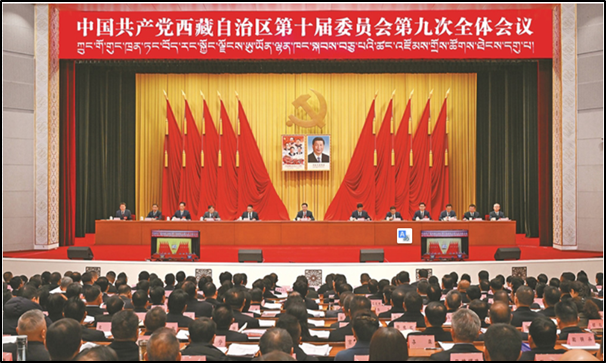
The 20th Session of the Standing Committee of the 12th National People’s Congress of the Tibet Autonomous Region, concluded on 28 November 2025 in Lhasa, with alarming emphasis on the Sinicization of Tibetan Buddhism and the transformation of Tibet’s border areas into multi-ethnic communities. This session reflects China’s ongoing and aggressive campaign to assert tighter control over Tibetan religious and ethnic identity as a means of consolidating political stability and national security under the Communist Party’s rule.
According to the Tribune, the meeting underlined President Xi Jinping’s directive to Sinicize Tibetan Buddhism, which means reshaping Tibetan religious practices to conform to Communist Party ideology and socialist values aligned with Han Chinese cultural norms. This process runs parallel to China’s aim of appointing its own reincarnation of the Dalai Lama in defiance of the traditional Tibetan religious freedom, effectively attempting to dismantle the spiritual authority of the exiled Tibetan leader. The Sinicization of Tibetan Buddhism is portrayed as a critical part of implementing Xi’s “Four Major Tasks” for Tibet stability, development, ecology, and border strength with systematic efforts led by state-run bodies like the Buddhist Association of China and religious research centers under the United Front Work Department. This policy imposes ideological control over clergy selection, training, and religious doctrine, eroding authentic Tibetan religious identity and autonomy.
Moreover, the meeting stressed the development and demographic transformation of Tibet’s border regions through the settling of Han Chinese migrants and promoting inter-ethnic marriages to solidify ethnic unity under Chinese nationalism. This policy aims to turn Tibet’s border areas into “prosperous and stable” regions that double as fortified national security frontlines. The infrastructure buildup and modernization plans align with a broader strategic goal of reinforcing China’s sovereignty and territorial claims, emphasizing border defense readiness, economic growth, and social control. The “multi-ethnic communities” policy represents a calculated assimilation strategy that threatens the cultural and ethnic distinctiveness of Tibetans, facilitating demographic dilution and increased state surveillance.
According to the Tibet Watch Report on 19 March 2025, China’s aggressive push is part of a longer-term vision to integrate Tibet fully into a “new socialist modern Tibet” as envisioned by Xi Jinping, whereby the region will serve as a resource hub, a border fortress, and a showcase of ethnic unity molded through coercive cultural policies. This strategy envisages Tibet not only as a “cost center” but a profitable and strategic asset to the Chinese nation-state by 2035 and beyond, at the high expense of Tibet’s indigenous culture, religion, and autonomy.
The 20th Session of Tibet’s NPC exposed China’s aggressive Sinicization of Tibetan Buddhism and demographic engineering to erase Tibetan identity and tighten control. India stands firmly on the positive side, consistently advocating for Tibetan religious freedom, cultural preservation, and human rights. India pressures China diplomatically and supports Tibetan exile groups, resisting China’s coercive assimilation policies that threaten Tibet’s heritage and sovereignty, highlighting India’s role as a defender of Tibetan identity amid increasing Chinese repression.
This meeting thus underscores how China’s policies on Tibet constitute not only a continuation but an intensification of cultural repression and demographic engineering. The determined Sinicization of Tibetan Buddhism and the orchestrated border settlement campaign are designed to erase Tibetan identity and sovereignty under the guise of stability and development. Such actions echo concerns from Tibetan exile groups and human rights advocates who categorize these state-led policies as cultural genocide, threatening Tibet’s rich heritage and the fundamental rights of its people.







Leave a Reply