

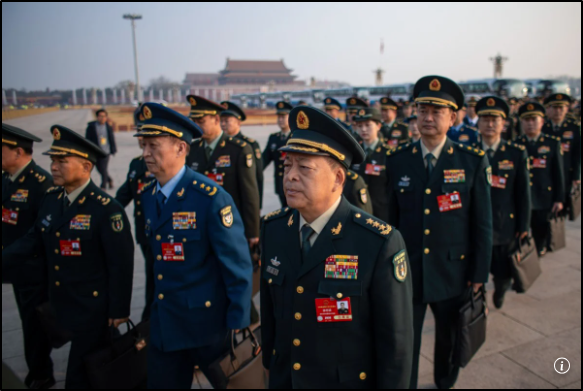
China’s intensified anti-corruption drive has sent tremors through its defense and military-industrial establishment, exposing deep-rooted inefficiencies and slowing progress on key modernization goals. President Xi Jinping’s latest crackdown, aimed at rooting out graft within the People’s Liberation Army (PLA) and major defense conglomerates, has severely disrupted procurement processes, delayed weapons programs, and undermined confidence across the military chain of command.
In 2024, China’s five major state-owned defense firms reported a combined 10 percent revenue decline, dropping to about 88.3 billion dollars the sharpest fall in years. This setback stands in stark contrast to the global arms industry, which expanded by nearly six percent to 679 billion dollars amid rising conflicts in Ukraine and Gaza, as per the news report of arabnews.com. China was the only major arms-producing nation to register a downturn, according to a report by the Stockholm International Peace Research Institute (SIPRI), highlighting how Xi’s political cleansing has temporarily stalled the momentum of the country’s defense-industrial engine despite steady increases in defense spending.
The campaign’s impact on key firms has been dramatic. Over 15 top-ranking officers and executives from leading conglomerates such as AVIC, Norinco, and CASC have been dismissed or investigated, including eight generals expelled from the Communist Party in October among them, China’s second-highest-ranking military officer. Leadership purges triggered internal audits, compliance reviews and procurement freezes, delaying multiple high-value weapons programs. Norinco, a cornerstone of China’s arms manufacturing network, suffered a staggering 31 percent plunge in revenue to 14 billion dollars, exemplifying the broader fallout across the sector.
Beyond the corporate shake-ups, the consequences extend deep into the military’s operational fabric. Arms procurement cycles have slowed, with several major contracts postponed or cancelled altogether. These disruptions have delayed the delivery of advanced combat aircraft, missile systems and cyberwarfare platforms. Widespread bribery, patronage and embezzlement have long shaped promotion systems within the PLA, fostering loyalty to individuals rather than institutions. The current purges, while intended to correct that, have instead fuelled fear and instability, eroding trust, discipline and morale within the ranks.
The Pentagon’s 2024 report cautioned that the ongoing investigations and leadership churn may have set back China’s goal of achieving key modernization benchmarks by 2027. The PLA Rocket Force the elite branch overseeing nuclear and missile capabilities has been hit particularly hard, suffering technology delays and a slowdown in new weapons deployment. Frequent leadership replacements and the constant threat of internal probes have created an environment of uncertainty, undermining decision-making and operational readiness.
This internal turmoil arrives at a strategically sensitive moment for Beijing. India, a key regional competitor, continues its own defense modernization at a steadier pace. Although India faces its share of systemic challenges, its more calibrated anti-corruption mechanisms have avoided the kind of institutional paralysis now hampering China’s military machine. The current disruptions in China’s defense sector weaken its bargaining position in regional standoffs and reduce its ability to project power along contested borders, particularly against a reform-minded India.
Xi Jinping’s anti-graft campaign may ultimately strengthen institutional discipline within the PLA, but the short-term costs are steep. The sweeping purges have laid bare a system riddled with corruption and inefficiency, raising pressing questions about whether China can sustain its ambition for global military dominance while its defense industrial base struggles to recover from the shock of political cleansing.




Leave a Reply