
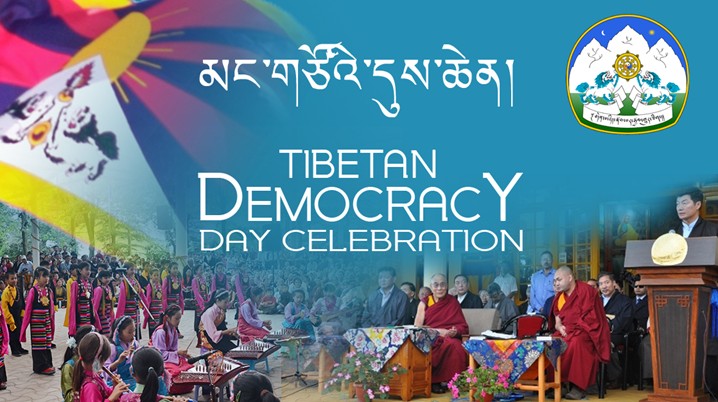
Tibetan Democracy Day is celebrated annually on September 2 and will mark the 65th anniversary of the establishment of the Tibetan democratic system in exile. Tibetan Democracy Day honours how the Tibetan exile community established and continues to practise democracy under the visionary guidance of His Holiness the Dalai Lama. Tibetans chose September 2 as their Democracy Day because it marks the historic date in 1960 when the first Tibetan Parliament-in-Exile was inaugurated and its members took their oaths in Bodh Gaya, India. Tibetans established a fully functional representative democratic government in exile, complete with elected leaders, a parliament, a judiciary, and a governing charter known as the Central Tibetan Administration (CTA), which functions according to democratic ideals and the rule of law.
The Central Tibetan Administration (CTA) is the government-in-exile of Tibet, headquartered in Dharamsala, India. It operates as a democratic political system for Tibetans in exile, representing their interests and preserving Tibetan culture, identity, and political aspirations and operates under the “Charter of the Tibetans in Exile,” adopted in 1991 and amended in 2011 after the Dalai Lama transferred political authority to elected leaders.
The CTA actively raises global awareness about the human rights situation and cultural repression Tibetans face under Chinese rule in Tibet. It lobbies governments, international organizations, and civil society worldwide to support Tibetan freedom and autonomy. Through exile programs, the CTA helps preserve and promote Tibetan language, religion, and culture, which are under threat inside Tibet.
CTA has launched a five-year initiative named “Strengthening Economic, Social, and Cultural Resilience of Tibetan Communities in South Asia” in collaboration with the U.S. Agency for International Development (USAID) and The Tibet Fund which focuses on job training, entrepreneurship support, and skills development. It has launched the Voluntary Tibet Advocacy Group (V-TAG) aimed at empowering Tibetans in exile to carry out global advocacy campaigns.
Tibetan democracy in exile has greatly influenced Tibetans who remain in Tibet, mainly as a beacon for freedom, political inspiration, and optimism. The exile democracy has fostered a political identity and unity for Tibetans worldwide, amplifying their calls for freedom and human rights and has greatly benefited Tibetans by providing political representation, preserving culture, and promoting welfare amidst displacement.
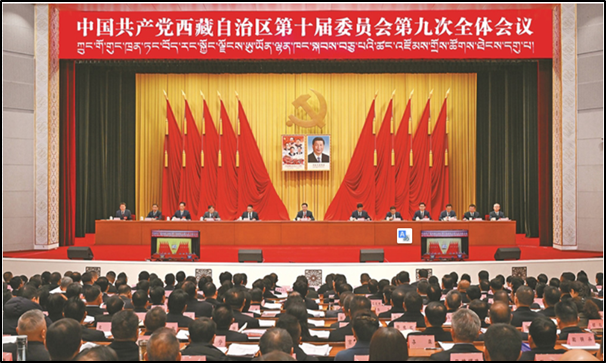
In contrast, Tibet under Chinese authoritarian rule is characterised by strong control of the Chinese Communist Party and authoritarian governance. Tibet under Chinese rule faces severe and systematic human rights violations, cultural suppression, and political oppression that starkly contradict fundamental justice and freedom. The Chinese authorities maintain oppressive surveillance and control over every aspect of Tibetan life. Public expressions of Tibetan nationalism, such as displaying the Tibetan flag or wishing the Dalai Lama a happy birthday, have been criminalized by Chinese authorities in Tibet, especially around significant occasions like the Dalai Lama’s 90th birthday on July 6, 2025.
Unlike CTA where the democratic system represents values of transparency, inclusion, and non-violence, The CCP’s policies constitute cultural genocide through the systematic Sinicization of Tibet. The Tibetan language is marginalized in schools, replaced by mandatory Chinese instruction. Ethnic Tibetans are being made minorities in their own land through mass migration of Han Chinese. Religious freedom, a core element of Tibetan identity, is ruthlessly curtailed. Tibetan Buddhism is tightly regulated and monitored by the state, with frequent bans on religious gatherings and severe restrictions on monasteries and nunneries.
India has long been a steadfast defender and advocate of Tibetan Buddhism, helping to ensure its survival and expansion. India and the Tibetan democracy in exile have a long and significant relationship. For the Tibetan people and their democratic goals, India has been a vital haven. Indian politicians have continued to engage in informal diplomatic relations with the CTA, and the government frequently strikes a compromise between its cultural and humanitarian assistance for Tibetans and its fragile bilateral ties with China.
Tibetan democracy in exile and Chinese authoritarian rule is diametrically opposed: one preserves Tibetan identity through democratic governance and peaceful advocacy, while the other enforces harsh repression to assimilate and dominate Tibet. Democracy does not operate in a vacuum but has to function within the framework of a given society. It is again up to the participants whether or not they take into consideration the prevailing factors in undertaking their actions. Their decisions have consequences.




Leave a Reply