
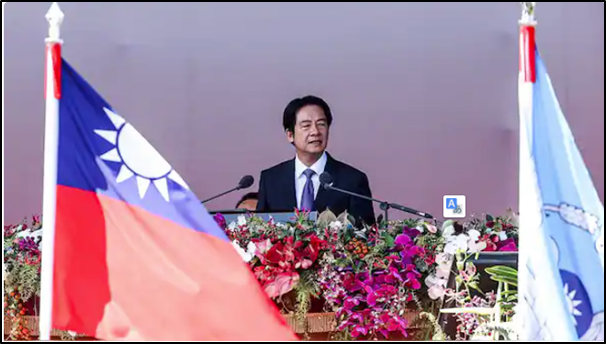
Taiwan has announced a historic supplementary defense budget of USD 40 billion to counter escalating military and political pressure from China. Unveiled by President Lai Ching-te, this budget will be allocated over eight years from 2026 to 2033, marking one of the largest defense investments in Taiwan’s modern history. The plan aims to sharply enhance Taiwan’s military capabilities by financing advanced air-defense systems, precision-strike missiles, drones, cyber-defense tools, and asymmetric warfare capabilities designed to deter potential Chinese aggression effectively.
According to the Reuters, the defense boost would raise Taiwan’s defense spending to 3.3% of gross domestic product (GDP) in 2026, with a long-term target of reaching 5% by 2030 a level unmatched in decades and positioning Taiwan among the world’s more heavily armed democracies. This substantial increase reflects Taipei’s strategic shift towards bolstering resilience against Beijing’s growing military provocations, which include increased air and naval activity near the Taiwan Strait and sophisticated psychological warfare campaigns to weaken Taiwanese unity.
On 25 Nov 25, Taiwan President Lai emphasized that safeguarding Taiwan’s sovereignty and democracy is non-negotiable. While reaffirming readiness for dialogue with Beijing, he made clear that Taiwan will not be coerced or provoked, underscoring that this defense package is vital to imposing significant costs and uncertainties on any potential Chinese military actions. Defense Minister Wellington Koo highlighted plans for joint procurement and co-development with the United States, including the deployment of an advanced air-defense network called “Taiwan Dome,” alongside agile missile units and modern drone fleets. These systems aim to enhance detection, interception, and rapid response, integrating artificial intelligence to counter cyber and electronic threats.
The timing of this announcement is significant amid rising tensions across the Taiwan Strait and increasing Chinese threats to forcibly reclaim the island. Beijing consistently views Taiwan as part of its territory and condemns Taiwan’s moves towards strengthening its independent defense as separatist provocations. Taiwan’s leadership and many international analysts view these developments as necessary deterrence steps, asserting that Taiwan’s vibrant democracy and sovereignty must be preserved against authoritarian aggression.
This unprecedented financial commitment not only signals Taiwan’s determination to defend its freedom but also marks a strategic pivot towards modern asymmetric warfare, reflecting lessons from recent geopolitical conflicts worldwide. Taiwan’s approach balances military readiness with diplomatic overtures, hoping to maintain stability while preparing rigorously for worst-case scenarios.
India’s expanding defense cooperation with Taiwan and democracies bolsters regional stability and deters China’s expansionism, countering its military coercion and authoritarian bullying to safeguard Indo-Pacific peace, freedom, and democracy.
Taiwan’s $40 billion defense augmentation demonstrates its resolve to maintain sovereignty, enhance military capacity, and deter Chinese coercion. This package strengthens air defense, missile capabilities, cyber resilience, and drone warfare, accompanied by a significant budget increase to 5% of GDP by 2030. The move is supported by closer U.S. military cooperation amid growing concerns about Beijing’s expanding regional ambitions.



Leave a Reply